Albanian activists accuse police of 90 brutality cases in Brussels
They also allege a 10 million euro bribe and illegal arrests, after protests in Tirana.
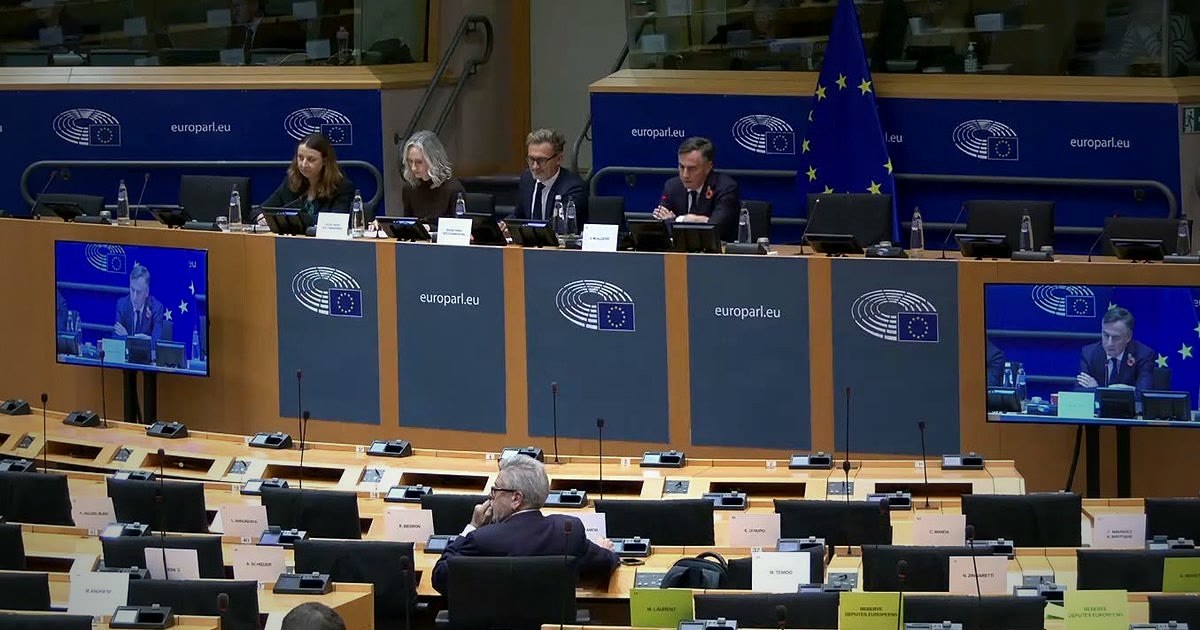
Albanian activists took corruption and police brutality claims to the European Parliament, describing 90 cases of alleged serious police violence.
The briefing was organized by MEPs Tineke Strik, Cristina Guarda and Andreas Schieder, as Prime Minister Edi Rama blamed the Tirana protests on radical “Antifa” groups, political opponents, foreign influence and organized crime.
The activists said the unrest began in late May over a major development project in Zvernec, a protected wetland on Albania’s southwestern coast. Environmental activist Joni Vorpsi alleged the project planned 6,000 units, with only 800 hotel rooms and the rest luxury villas for private sale. He claimed construction crews flattened protected sand dunes and drained wetlands without proper permits, and that the machinery was later withdrawn without anyone being held accountable.
Activists also pointed to environmental rules they say enable heavy development inside national parks. They argued a new protected-areas law conflicts with EU environmental standards.
Redi Muçi, a professor and representative of Lëvizja Bashkë, said the “Mountain Package” law allows the transfer of more than 660,000 hectares of public land, about one-quarter of Albania, to private investors for a symbolic fee of one euro. He claimed roughly 22 percent of that land lies inside protected areas, and linked some deals to ongoing SPAK investigations into money laundering connected to the construction sector.
Investigative journalist Gjergj Erebara described alleged deep institutional corruption, including a case in which a senior Interior Ministry official allegedly took a 10 million euro bribe for a police IT contract. He said that by the time the official was investigated, the person had acquired a yacht, a private plane and property near Paris. Erebara also cited alleged extortion at the state postal service, where managers allegedly forced workers to hand over part of their salaries to keep their jobs.
Human rights lawyer Dea Nini presented a report by 40 independent lawyers documenting the alleged police brutality. She said officers repeatedly beat people who were already handcuffed or locked inside police vans. She cited official figures of 319 arrests, including 38 minors, and said courts later ruled 62 arrests illegal. Nini added that officers involved wore balaclavas and removed their identification numbers, and she said the government set up compensation schemes for damaged business property while doing little for injured citizens.
Michael Gahler of the EPP asked how Albania can be seen as an EU frontrunner after Rama intervened to protect a deputy prime minister’s immunity. Tineke Strik of the Greens warned that nature risks permanent destruction before European standards are applied, while Ilaria Salis of The Left said citizens were met with repression and arbitrary arrests. Marco Tarquinio of S&D highlighted fines of up to 5,500 euros in a country where the average salary is about 930 euros.
For the activists, the core issue is accountability, while Rama’s government has not publicly presented concrete evidence for its claims about foreign influence and “Antifa.”
ADVERTISEMENT
Source:
exit.al