Barcelona court keeps accidental death scenario open in Isak Andic case as defence challenges remand
Jonathan Andic’s lawyers say the ruling weakens the case for provisional prison and leaves room for a fortuitous fall theory.
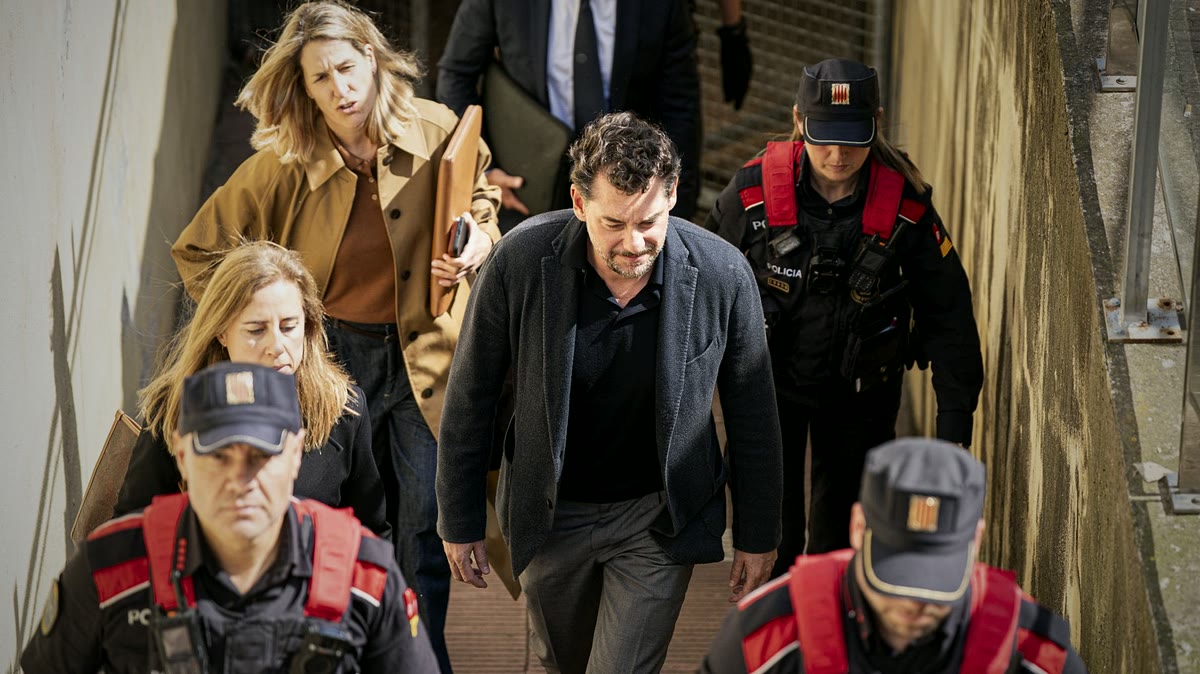
A Provincial Court in Barcelona has confirmed a remand order, with bail set at 1 million euros, for a man accused of the suspected murder of his father during a mountain excursion.
The Ninth Section of the Provincial Court of Barcelona dismissed the appeal filed by the defense of the accused man in the case, confirming the lower court’s decision from 19 May 2026. The remand had been ordered as provisional, communicated, and eludable with bail, which the man paid the same day he was detained.
The court’s ruling was adopted by a majority of two votes against one. The presiding judge, who issued a dissenting vote, argued that the remand should have been revoked.
The decision was handed down as the investigation carried out by the regional police into the death of the father, who died on 14 December 2024 during an outing in Montserrat, moved forward.
The court kept the precautionary measures imposed by the investigating judge: withdrawal of the passport, a ban on leaving national territory, and weekly appearances before a court.
While the majority said the accidental fall scenario still has "elements of plausibility" and cannot be ruled out, it also found that technical reports did not determine an assault, a struggle, or involvement of a third party. It noted there were no traces linking the accused to violent action and that no specific mechanism of intervention had been established.
Even so, the court said there are "sufficient grounds" to support the accused’s possible participation at this stage, based on multiple converging factors, including that the fall happened at the only exposed point of a route the accused knew, discrepancies in explanations about what he saw and heard when compared with the victim’s phone records and visibility measurements, and the fact that about eight minutes passed before a call to 112.
The ruling also addressed delays in the proceedings, saying the three judges could not review the extensive case material, including videos, audio, and expert reports, until mid-September.
New court material reported by La Vanguardia Sucesos has now added that the Audiencia de Barcelona case file includes 117 pages of court documents and messages between the businessman and a therapist in the months before his death.
According to those materials, between September and November 2024 the father asked the therapist to help persuade his son to leave executive work at Mango for a one-year sabbatical, without making it seem like an order from his father. Both agreed to keep the real objective secret so the son would not feel humiliated again or trigger another father-son conflict as they tried to rebuild their relationship.
The materials say that on 9 December 2024 the therapist told the father that the son should ask for a formal meeting to discuss the sabbatical. Two days later, the therapist reported that the son was excited about having that conversation and wanted to talk privately while walking.
In the last documented message before the businessman died, on 12 December 2024, the therapist confirmed that the son had proposed an excursion on a route through Montserrat, described as a way to open a new stage of communication. The father accepted, while the court materials say the proposal concealed a final aim: a complete withdrawal of responsibilities at Mango, with a pretext that the firm did not want any family member involved in management.
The materials also state that the court reduced the value of an economic motive indicator because the son was unaware of the father’s plan.
In a separate statement issued on Wednesday night, Jonathan Andic’s defence said the ruling keeps open the possibility that Isak Andic died after an accidental fall during a walk in Montserrat, and argued that it weakens the investigation’s focus on a business-and-inheritance theory involving a foundation and later wills.
The lawyers said the court maintained the possibility that the deceased lost his balance, and they described both the majority reasoning and the dissenting vote as a calm and balanced assessment of the evidence. They said the judges did not discard the idea of a fortuitous fall during the 14 December 2024 excursion on the les Feixades route in Montserrat, and that the deceased’s physical limitations could explain a loss of balance.
The defence also said the ruling weakened the weight given to the economic motive theory linked to the planned foundation and subsequent wills.
They placed special emphasis on the president’s dissenting vote. The magistrate questioned whether the indications selected to justify a measure as severe as provisional imprisonment were developed and supported enough by concrete investigative sources. He argued that indications may justify an investigation, but those used to order prison must have sufficient intensity to reach the level of "motivos bastantes" for custody.
The defence said the dissent suggested that restrictions could instead be limited to a ban on leaving Spain and an obligation to appear periodically before the court.
The lawyers stressed that the ruling does not end the investigation, but they described it as introducing balance into how the facts are assessed, distinguishing between suspicions that keep the inquiry alive and indicators strong enough to justify the harshest restrictions on liberty.
The latest status is that the accused remains under remand subject to the same bail conditions, while the investigation continues.
Updated 18 November 2026: La Vanguardia Sucesos added the defence statement and court arguments keeping open the accidental death theory and challenging the remand strength.
ADVERTISEMENT
Source:
La Vanguardia Sucesos