Greece has no long-term support system for children after femicide
Experts warn many children face disrupted care, housing, and psychological help.
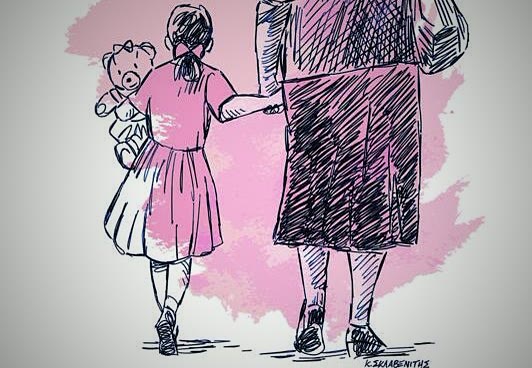
Children who lose their mothers to gender-based killings in Greece can end up facing the collapse of their entire world, with no specialized long-term support system to protect their psychological, social and financial wellbeing.
Psychologist Stefanos Alevizos says the impact is often broader than grief alone. When the perpetrator is the father, children can also lose their second parent, and may be forced to change homes, schools and family environments within a very short time.
Alevizos describes complex trauma after femicide, including intense grief, fear, insecurity, anger, guilt and shame. He notes that children can feel conflicting emotions toward the father and may love him while also fearing him, or wonder whether they could have prevented what happened.
He adds that stigma and silence inside families can deepen isolation and make it harder for children to speak. As children grow older, some may fear abandonment, struggle to trust and find that close relationships can conceal danger, with an increased risk of post-traumatic stress and depression.
A research project titled AEGIS is examining the effects of femicide on children of victims, covering children who are victims of lethal violence within a couple. Its lead researcher, an associate professor in social work, says the lived experiences of survivors, their support needs, and recovery paths remain largely unexplored in Greece.
She stresses there is no tool, management protocol or specialized service to support children over the long term in Greece. Assistance is fragmented, coming either from public services or NGOs, but not through a targeted model of care.
Lawyer Kleio Papapantoleon explains that when relatives are not available, children are initially taken to a children’s hospital and then transferred to a care facility. She describes “multiple shocks” as children lose not only their two parents but also the life they knew, along with their reference points.
The article also says children’s financial interests are not protected by current legislation, despite Law 3811/2009. The provisions refer to victims, and the text cuts off before further details.
ADVERTISEMENT
Source:
To Vima