Israel plans a 150-hectare settler industrial zone on West Bank land
Umm Safa villagers in the occupied West Bank say businesses and farms are being strangled.
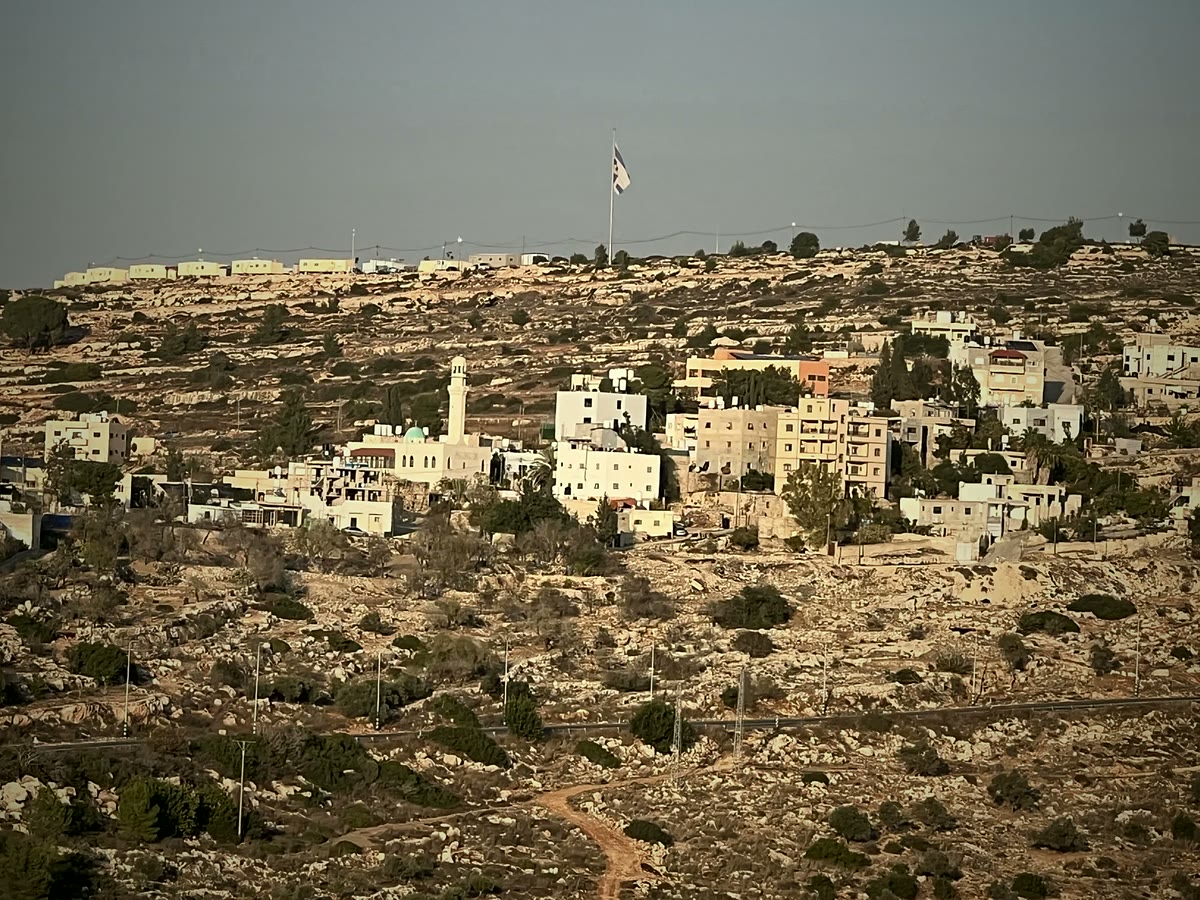
Residents of the village of Umm Safa, north of Ramallah, say Israel has advanced plans for a new Israeli settler industrial zone that would take 1,500 dunums, or 150 hectares, of their land, a move they warn will crush civilian and business life.
The village council says Israel has already seized 4,700 dunums of the 4,800 dunums making up Umm Safa, leaving locals with only around 100 dunums, roughly 14 football pitches, for a population of about 750 people.
Umm Safa is reportedly surrounded by several settlement outposts, and residents say the entrance to the village has been blocked by Israeli forces for the past three years.
The expansion is part of dozens of settler industrial zones being established across the West Bank, residents and researchers say, restricting farmers’ access to land and limiting how Palestinian businesses operate. Experts cited by Al Jazeera say the factories and production facilities are built alongside settlement growth to feed Palestinian areas into Israel’s production and distribution cycle.
A researcher at the Land Research Center said such locations allow control over large areas of Palestinian land while restricting Palestinian urban and agricultural expansion, with infrastructure designed to connect settlement zones to the Israeli market.
Israel runs 28 settler industrial zones in the West Bank and occupied East Jerusalem, covering a total area of 8,844 dunums, according to the Colonization and Wall Resistance Commission. These are concentrated around three major zones, including Barkan in Salfit governorate, and industrial estates around Jerusalem governorate.
The commission also warns that a new generation of industrial zones is planned or under development along the western edge of the West Bank near the Green Line, with road links including Routes 5, 6 and 443. Palestinian movement, it says, is limited by poor-quality roads interrupted by hundreds of military gates and checkpoints.
The environmental impact is also flagged, with reports warning that pollution could leak hazardous waste into farmland and water sources, while emissions from petrochemical operations could harm air quality. Neighbouring farming communities fear both agricultural and health risks.
Separate examples of disruption are reported from the same period, including a local steel supplier who received a demolition notice and was told to vacate premises near Nablus, describing losses of at least $1m tied to relocation and damage to steel during transport.
The latest status in the Umm Safa case is that a land confiscation notice for the industrial zone was issued in May, while Israel has already seized most of the village’s land, according to residents and rights monitors.
ADVERTISEMENT
Source:
Al Jazeera